
SERMON NOTES 23 AUG 2026
SACRED TIME — WEEK 5
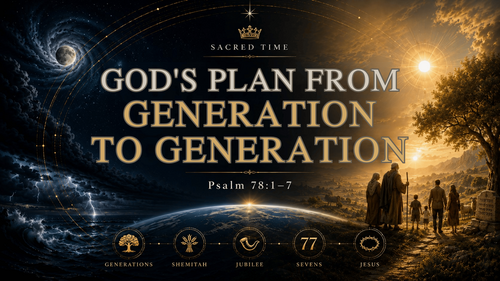
God’s Plan From Generation to Generation
SACRED TIME — WEEK 5
God’s Plan From Generation to Generation
Pastor Ryan Perry
Good Hope Baptist Church
23 August 2026
Primary Text: Psalm 78:1–7
Sermon Roadmap: Shemitah → Jubilee → Jesus
Sermon Summary
God never intended for one generation to accomplish His entire work. From the beginning, His plan has been for each generation to receive the testimony of His faithfulness, live according to His Word, and faithfully entrust that truth to those who come next.
Psalm 78 commands God’s people not to hide His glorious deeds from their children, but to tell them to the coming generation. The goal is greater than preserving traditions or teaching proper behavior. We pass on the truth so that the next generation will “set their hope in God” (Psalm 78:7).
This means we must preserve the testimony of God—not merely the preferences of one generation. Styles, language, technology, and cultural expressions will change, but God’s Word and the gospel of Jesus Christ must remain unchanged.
Receive It, Live It, and Pass It On
Deuteronomy 6:4–7 teaches that God’s Word must first be written upon our own hearts before we can teach it diligently to others. Truth cannot be passed on faithfully if it exists only as information. It must shape our thoughts, choices, relationships, and way of life.
Mature believers need younger believers to whom they can entrust what God has taught them. Younger believers need mature believers who can offer wisdom, testimony, encouragement, and guidance. God designed the generations to work together—not to compete, stereotype, or separate from one another.
“One generation shall commend your works to another, and shall declare your mighty acts.” —Psalm 145:4
Shemitah: Release Your Grip and Trust God
The Hebrew word Shemitah carries the idea of letting go, releasing, or relinquishing. Every seventh year, Israel was commanded to grant a release and allow the land to rest (Deuteronomy 15:1–2; Leviticus 25:3–4).
Shemitah taught God’s people that He—not their labor, possessions, or accumulated resources—was their true source. Obedience required them to release their grip and trust God to provide.
The same question confronts us today: What are we holding onto that God is telling us to release?
Jubilee: Liberty, Restoration, and Stewardship
After seven cycles of seven years, Israel was to observe the Year of Jubilee. A ram’s horn announced liberty throughout the land. Debts were released, people were set free, and ancestral property was restored (Leviticus 25:8–23).
Jubilee reminded Israel that they were stewards rather than ultimate owners: “The land is mine,” God declared. Everything entrusted to us—our resources, influence, experiences, wisdom, and testimony—belongs to God and should be used for His purposes.
This raises two important questions:
Jesus Is Our Jubilee
In Luke 4:18–21, Jesus announced good news to the poor, liberty to the captives, sight to the blind, and the arrival of the Lord’s favor. He then declared, “Today this Scripture has been fulfilled in your hearing.”
Shemitah taught release. Jubilee proclaimed liberty. Jesus accomplished the greater freedom to which both pointed.
Christ deals with humanity’s deepest captivity: sin, separation from God, and spiritual bondage. Through His completed work, we no longer have to earn the Father’s love or live in constant fear that we are not good enough. We are invited to trust Jesus, receive His grace, and live as people who have been set free.
Jesus is Lord of every generation, and He alone can save the soul.
One Spirit Working Through Many Generations
Acts 2:17–18 pictures sons and daughters prophesying, young people seeing visions, and older people dreaming dreams. God pours out the same Spirit upon people of different ages and experiences.
The expression of faith may change from one generation to another. Younger believers may sing in their own style, speak in the language of their time, and use new tools to communicate the truth. That is not something to fear.
The expression may change. The gospel must not.
Passing on the faith also requires more than words. Paul wrote that he shared not only the gospel but his own life with others (1 Thessalonians 2:8). Intergenerational discipleship grows through relationships—knowing one another, listening, praying together, offering loving correction, opening doors, and giving younger believers room to serve, lead, and grow.
God’s pattern is simple:
Receive the truth. Live the truth. Teach the truth. Entrust the truth.
Personal Response
The sermon concludes with four questions for prayer and reflection:
There is one God, one gospel, and many generations. God calls each generation to receive His Word, live it faithfully, and entrust it to others so that those who come after us may set their hope in Him.
Key Scriptures
Psalm 78:1–7; Deuteronomy 6:4–7; Psalm 145:4; Psalm 71:18; Deuteronomy 15:1–2; Leviticus 25:3–23; Luke 4:18–21; Acts 2:17–18; 1 Thessalonians 2:8; Isaiah 58:12; Romans 12:2; 2 Timothy 3:14–15; 2 Timothy 2:2
God’s Plan From Generation to Generation
Pastor Ryan Perry
Good Hope Baptist Church
23 August 2026
Primary Text: Psalm 78:1–7
Sermon Roadmap: Shemitah → Jubilee → Jesus
Sermon Summary
God never intended for one generation to accomplish His entire work. From the beginning, His plan has been for each generation to receive the testimony of His faithfulness, live according to His Word, and faithfully entrust that truth to those who come next.
Psalm 78 commands God’s people not to hide His glorious deeds from their children, but to tell them to the coming generation. The goal is greater than preserving traditions or teaching proper behavior. We pass on the truth so that the next generation will “set their hope in God” (Psalm 78:7).
This means we must preserve the testimony of God—not merely the preferences of one generation. Styles, language, technology, and cultural expressions will change, but God’s Word and the gospel of Jesus Christ must remain unchanged.
Receive It, Live It, and Pass It On
Deuteronomy 6:4–7 teaches that God’s Word must first be written upon our own hearts before we can teach it diligently to others. Truth cannot be passed on faithfully if it exists only as information. It must shape our thoughts, choices, relationships, and way of life.
Mature believers need younger believers to whom they can entrust what God has taught them. Younger believers need mature believers who can offer wisdom, testimony, encouragement, and guidance. God designed the generations to work together—not to compete, stereotype, or separate from one another.
“One generation shall commend your works to another, and shall declare your mighty acts.” —Psalm 145:4
Shemitah: Release Your Grip and Trust God
The Hebrew word Shemitah carries the idea of letting go, releasing, or relinquishing. Every seventh year, Israel was commanded to grant a release and allow the land to rest (Deuteronomy 15:1–2; Leviticus 25:3–4).
Shemitah taught God’s people that He—not their labor, possessions, or accumulated resources—was their true source. Obedience required them to release their grip and trust God to provide.
The same question confronts us today: What are we holding onto that God is telling us to release?
Jubilee: Liberty, Restoration, and Stewardship
After seven cycles of seven years, Israel was to observe the Year of Jubilee. A ram’s horn announced liberty throughout the land. Debts were released, people were set free, and ancestral property was restored (Leviticus 25:8–23).
Jubilee reminded Israel that they were stewards rather than ultimate owners: “The land is mine,” God declared. Everything entrusted to us—our resources, influence, experiences, wisdom, and testimony—belongs to God and should be used for His purposes.
This raises two important questions:
- What should we hand forward? Faith, wisdom, prayer, courage, generosity, and truth.
- What must end with us? Bitterness, fear, secrecy, prejudice, destructive habits, and unhealed wounds.
Jesus Is Our Jubilee
In Luke 4:18–21, Jesus announced good news to the poor, liberty to the captives, sight to the blind, and the arrival of the Lord’s favor. He then declared, “Today this Scripture has been fulfilled in your hearing.”
Shemitah taught release. Jubilee proclaimed liberty. Jesus accomplished the greater freedom to which both pointed.
Christ deals with humanity’s deepest captivity: sin, separation from God, and spiritual bondage. Through His completed work, we no longer have to earn the Father’s love or live in constant fear that we are not good enough. We are invited to trust Jesus, receive His grace, and live as people who have been set free.
Jesus is Lord of every generation, and He alone can save the soul.
One Spirit Working Through Many Generations
Acts 2:17–18 pictures sons and daughters prophesying, young people seeing visions, and older people dreaming dreams. God pours out the same Spirit upon people of different ages and experiences.
The expression of faith may change from one generation to another. Younger believers may sing in their own style, speak in the language of their time, and use new tools to communicate the truth. That is not something to fear.
The expression may change. The gospel must not.
Passing on the faith also requires more than words. Paul wrote that he shared not only the gospel but his own life with others (1 Thessalonians 2:8). Intergenerational discipleship grows through relationships—knowing one another, listening, praying together, offering loving correction, opening doors, and giving younger believers room to serve, lead, and grow.
God’s pattern is simple:
Receive the truth. Live the truth. Teach the truth. Entrust the truth.
Personal Response
The sermon concludes with four questions for prayer and reflection:
- Do I know God personally, or am I living on someone else’s testimony?
- What destructive pattern must stop with me?
- What truth about God’s work in my life must I tell the next generation?
- Who am I helping to follow Jesus?
There is one God, one gospel, and many generations. God calls each generation to receive His Word, live it faithfully, and entrust it to others so that those who come after us may set their hope in Him.
Key Scriptures
Psalm 78:1–7; Deuteronomy 6:4–7; Psalm 145:4; Psalm 71:18; Deuteronomy 15:1–2; Leviticus 25:3–23; Luke 4:18–21; Acts 2:17–18; 1 Thessalonians 2:8; Isaiah 58:12; Romans 12:2; 2 Timothy 3:14–15; 2 Timothy 2:2
Posted in Sermon Notes
Recent
Archive
2026
January
February
March
Sermon Study Guide 01 March 2026Parent Discipleship Guide 01 March 2026Sermon Notes 08 March 2026Devotional Guide 08 March 2026Parent Discipleship Guide 08 March 2026Bulletin 08 March 2026Bulletin 15 March 2026Sermon Notes 15 March 2026Parent Discipleship Guide 15 March 2026Devotional Guide 15 March 2026Sermon Notes 22 March 2026Devotional Guide 22 March 2026Parent Discipleship Guide 22 March 2026Bulletin 22 March 2026Sermon Notes 29 March 2026Devotional Guide 29 March 2026Parent Discipleship Guide 29 March 2026Bulletin 29 March 2026
April
Sermon Notes 05 April 2026Devotional Guide 05 April 2026Parent Discipleship Guide 05 April 2026Bulletin 05 April 2026Sermon Notes 12 April 2026Bulletin 12 April 2026Sermon Notes 19 April 2026Parent Discipleship Guide 19 April 2026 Devotional Guide 19 April 2026Bulletin 19 April 2026Bulletin 26 April 2026Sermon Notes 26 April 2026Devotional Guide 26 April 2026Parent Discipleship Guide 26 April 2026
May
June
2025
July
August
September