SERMON NOTES 01 MARCH 2026
Passover 2026 Sermon 1: God’s Feasts and the Story of Salvation – Why Christians Must Understand God’s Feasts
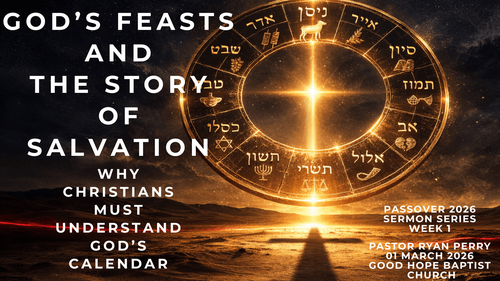
Passover 2026 Sermon 1
God’s Feasts and the Story of Salvation – Why Christians Must Understand God’s Feasts
Pastor Ryan Perry
Good Hope Baptist Church
1 March 2026
Primary Texts: Colossians 2:17; Leviticus 23:2; Deuteronomy 16:16; John 5:39
As we move toward Easter, we are going to spend the next several weeks walking through a story God gave His people long before Jesus was born, a story that explains salvation more clearly than we often realize.
It is the story of God’s feasts. God used these appointed times to explain the Gospel before the cross ever happened.
Here’s the heart of this whole series: God built the Gospel into Israel’s calendar.
______________________________________________
Thesis: God built the Gospel into Israel’s calendar
The feasts were about teaching God’s people how He saves, how He forms a people, and how redemption ultimately ends.
Colossians 2:17 – “These are a shadow of the things to come, but the substance belongs to Christ.”
God gave Israel a discipleship calendar designed to shape Israel’s understanding of who God is, how He saves, and where history is going.
Leviticus 23:2 – “These are the appointed times of the LORD…”
God isn’t saying, “Come eat.” God is saying, “I will meet you here.”
The Hebrew word is moed, and it means an appointment, a set meeting, or a scheduled encounter.
Deuteronomy 16:16 – “Three times a year all your males shall appear before the LORD your God…”
God built these meetings into Israel’s rhythm of life. These were not optional religious holidays. They were divine appointments.
The food was never the point. The meeting was.
John 5:39 – “These are the Scriptures that testify about me.”
Jesus Himself said the Scriptures testify about Him.
The feasts tell one unified story, and that story is fulfilled in Jesus Christ.
You could say God gave Israel a discipleship calendar.
______________________________________________
Passover – Salvation Accomplished
On God’s calendar, Passover always comes first, and that is not accidental.
Exodus 12:13 – “When I see the blood, I will pass over you.”
Passover answers the most basic question of all: How does a holy God rescue sinful people from death?
Passover teaches that salvation requires a substitute, blood must be shed, and God Himself stands between His people and judgment.
1 Corinthians 5:7 – “For Christ, our Passover lamb, has been sacrificed.”
Paul makes the connection unmistakable. Christ, our Passover lamb, has been sacrificed.
This is why Jesus died during Passover.
This is why the Last Supper was a Passover meal.
Luke 22:19–20 – “This is my body… this cup is the new covenant in my blood.”
Passover teaches this foundational truth: Salvation is received, not achieved.
Without Passover, the cross makes no sense. Passover is the blueprint that makes the cross unmistakable.
______________________________________________
Pentecost – Salvation Empowered
Fifty days after Passover came Pentecost.
Exodus 34:22 – “You shall keep the Feast of Weeks… the firstfruits of the wheat harvest.”
Originally, it celebrated the harvest and thanksgiving for God’s provision. Later Jewish tradition connected Pentecost with the giving of the Law at Sinai.
Acts 2:1–4 – “When the day of Pentecost arrived… they were all filled with the Holy Spirit.”
Then, in the New Testament, on that very day, God did something astonishing. God wrote His law on hearts instead of stone.
Ezekiel 36:27 – “I will put my Spirit within you.”
Pentecost teaches us that God does not just save us from something; He saves us FOR something.
Passover rescues. Pentecost empowers.
Without Pentecost, salvation becomes private and powerless.
______________________________________________
Tabernacles – Salvation Completed
The final feast was the Feast of Booths, or Tabernacles.
Leviticus 23:43 – “That your generations may know that I made the people of Israel dwell in booths.”
Israel lived in temporary shelters to remember that God had dwelt with them in the wilderness
John 1:14 – “The Word became flesh and dwelt among us.”
But Tabernacles was always forward-looking; it pointed beyond tents in the desert.
That word dwelt literally means tabernacled.
Revelation 21:3 – “Behold, the dwelling place of God is with man.”
And the story ends here.
Tabernacles teaches us this: Salvation ends in presence, not escape
______________________________________________
The feasts are God’s three-part Gospel rhythm:
Passover explains why Jesus died. Pentecost explains why the Spirit was given.
Tabernacles explains where redemption is going.
God gathered His people three times a year to teach them one story: Salvation, Transformation, and Presence.
That is the Gospel.
________________________________________________
And God begins that story not with raw power, not with grand instruction, but with Passover, with a lamb and a door covered in blood.
So that’s where we are going next.
Before we talk about the cross, before we talk about resurrection, before we talk about victory, we are going to slow down and understand Passover.
Not to become Jewish.
Not to return to the Law.
But to understand salvation the way God first explained it.
Because until we understand Passover, the Last Supper, or as others call it, the Eucharist, can feel symbolic but unclear. The cross can feel tragic but confusing. And, Easter can feel powerful but disconnected.
Exodus 3:7 – “I have surely seen the affliction of my people…”
Next week, we begin where God begins: With a God who hears the cry of His people, moves toward their suffering, and places Himself between them and destruction.
God’s Feasts and the Story of Salvation – Why Christians Must Understand God’s Feasts
Pastor Ryan Perry
Good Hope Baptist Church
1 March 2026
Primary Texts: Colossians 2:17; Leviticus 23:2; Deuteronomy 16:16; John 5:39
As we move toward Easter, we are going to spend the next several weeks walking through a story God gave His people long before Jesus was born, a story that explains salvation more clearly than we often realize.
It is the story of God’s feasts. God used these appointed times to explain the Gospel before the cross ever happened.
Here’s the heart of this whole series: God built the Gospel into Israel’s calendar.
______________________________________________
Thesis: God built the Gospel into Israel’s calendar
The feasts were about teaching God’s people how He saves, how He forms a people, and how redemption ultimately ends.
Colossians 2:17 – “These are a shadow of the things to come, but the substance belongs to Christ.”
God gave Israel a discipleship calendar designed to shape Israel’s understanding of who God is, how He saves, and where history is going.
Leviticus 23:2 – “These are the appointed times of the LORD…”
God isn’t saying, “Come eat.” God is saying, “I will meet you here.”
The Hebrew word is moed, and it means an appointment, a set meeting, or a scheduled encounter.
Deuteronomy 16:16 – “Three times a year all your males shall appear before the LORD your God…”
God built these meetings into Israel’s rhythm of life. These were not optional religious holidays. They were divine appointments.
The food was never the point. The meeting was.
John 5:39 – “These are the Scriptures that testify about me.”
Jesus Himself said the Scriptures testify about Him.
The feasts tell one unified story, and that story is fulfilled in Jesus Christ.
You could say God gave Israel a discipleship calendar.
______________________________________________
Passover – Salvation Accomplished
On God’s calendar, Passover always comes first, and that is not accidental.
Exodus 12:13 – “When I see the blood, I will pass over you.”
Passover answers the most basic question of all: How does a holy God rescue sinful people from death?
Passover teaches that salvation requires a substitute, blood must be shed, and God Himself stands between His people and judgment.
1 Corinthians 5:7 – “For Christ, our Passover lamb, has been sacrificed.”
Paul makes the connection unmistakable. Christ, our Passover lamb, has been sacrificed.
This is why Jesus died during Passover.
This is why the Last Supper was a Passover meal.
Luke 22:19–20 – “This is my body… this cup is the new covenant in my blood.”
Passover teaches this foundational truth: Salvation is received, not achieved.
Without Passover, the cross makes no sense. Passover is the blueprint that makes the cross unmistakable.
______________________________________________
Pentecost – Salvation Empowered
Fifty days after Passover came Pentecost.
Exodus 34:22 – “You shall keep the Feast of Weeks… the firstfruits of the wheat harvest.”
Originally, it celebrated the harvest and thanksgiving for God’s provision. Later Jewish tradition connected Pentecost with the giving of the Law at Sinai.
Acts 2:1–4 – “When the day of Pentecost arrived… they were all filled with the Holy Spirit.”
Then, in the New Testament, on that very day, God did something astonishing. God wrote His law on hearts instead of stone.
Ezekiel 36:27 – “I will put my Spirit within you.”
Pentecost teaches us that God does not just save us from something; He saves us FOR something.
Passover rescues. Pentecost empowers.
Without Pentecost, salvation becomes private and powerless.
______________________________________________
Tabernacles – Salvation Completed
The final feast was the Feast of Booths, or Tabernacles.
Leviticus 23:43 – “That your generations may know that I made the people of Israel dwell in booths.”
Israel lived in temporary shelters to remember that God had dwelt with them in the wilderness
John 1:14 – “The Word became flesh and dwelt among us.”
But Tabernacles was always forward-looking; it pointed beyond tents in the desert.
That word dwelt literally means tabernacled.
Revelation 21:3 – “Behold, the dwelling place of God is with man.”
And the story ends here.
Tabernacles teaches us this: Salvation ends in presence, not escape
______________________________________________
The feasts are God’s three-part Gospel rhythm:
- Passover is Salvation Accomplished; it explains why Jesus died.
- Pentecost is Salvation Empowered; it explains why the Spirit was given.
- Tabernacles is Salvation Completed; it explains where redemption is going.
Passover explains why Jesus died. Pentecost explains why the Spirit was given.
Tabernacles explains where redemption is going.
God gathered His people three times a year to teach them one story: Salvation, Transformation, and Presence.
That is the Gospel.
________________________________________________
And God begins that story not with raw power, not with grand instruction, but with Passover, with a lamb and a door covered in blood.
So that’s where we are going next.
Before we talk about the cross, before we talk about resurrection, before we talk about victory, we are going to slow down and understand Passover.
Not to become Jewish.
Not to return to the Law.
But to understand salvation the way God first explained it.
Because until we understand Passover, the Last Supper, or as others call it, the Eucharist, can feel symbolic but unclear. The cross can feel tragic but confusing. And, Easter can feel powerful but disconnected.
Exodus 3:7 – “I have surely seen the affliction of my people…”
Next week, we begin where God begins: With a God who hears the cry of His people, moves toward their suffering, and places Himself between them and destruction.
Posted in Sermon Notes
Recent
Archive
2026
January
February
March
Sermon Study Guide 01 March 2026Parent Discipleship Guide 01 March 2026Sermon Notes 08 March 2026Devotional Guide 08 March 2026Parent Discipleship Guide 08 March 2026Bulletin 08 March 2026Bulletin 15 March 2026Sermon Notes 15 March 2026Parent Discipleship Guide 15 March 2026Devotional Guide 15 March 2026Sermon Notes 22 March 2026Devotional Guide 22 March 2026Parent Discipleship Guide 22 March 2026Bulletin 22 March 2026Sermon Notes 29 March 2026Devotional Guide 29 March 2026Parent Discipleship Guide 29 March 2026Bulletin 29 March 2026
April
Sermon Notes 05 April 2026Devotional Guide 05 April 2026Parent Discipleship Guide 05 April 2026Bulletin 05 April 2026Sermon Notes 12 April 2026Bulletin 12 April 2026Sermon Notes 19 April 2026Parent Discipleship Guide 19 April 2026 Devotional Guide 19 April 2026Bulletin 19 April 2026Bulletin 26 April 2026Sermon Notes 26 April 2026Devotional Guide 26 April 2026Parent Discipleship Guide 26 April 2026
May
June
2025
July
August
September